Four Dry Boreholes in the Khomas Hochland: A Weekend of Water Divining With My Dad


Last weekend my dad and I drove out to a farm about 100 km from Windhoek, deep in the Khomas Hochland. The farm owner had a familiar problem: several old boreholes scattered across the property, most of them dry or abandoned, and no clear idea where to drill next. Could we take a look?
Image: The old farmhouse, built in 1951. Every farm in the Khomas Hochland has a story, and most of those stories are about water.
For me there is no better way to spend a Saturday. My dad has the same gift for finding water that I have, and walking the veld together, rods in hand, is something we both look forward to. We were also lucky with the weather. September in the Hochland can already be hot, but this weekend the temperatures stayed cool, which makes a long day of walking rocky ground a lot more pleasant.
The brief was simple: inspect four old borehole sites and tell the owner which of them still had water, and where to drill if they didn't.
Site 1: The borehole that still works
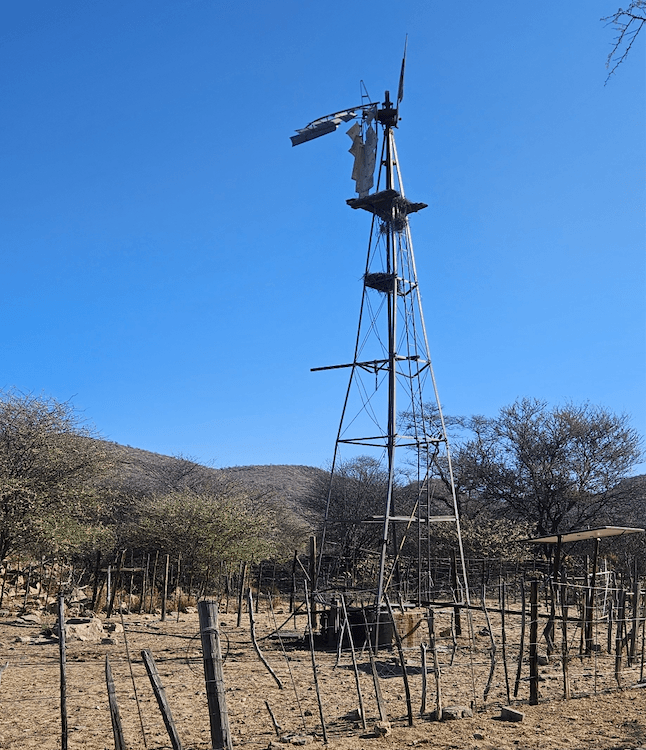
The first site, close to the farmhouse, actually had two boreholes. One of them is still in use, fitted with a solar pump, and delivers water for the household and the livestock.
This was a good place to start. When you stand on a borehole that you know is producing, you can check your own reading against reality. The rods reacted exactly where the borehole is – I was standing in the right place. It is a small thing, but it matters: it confirms that the signal you are picking up that day is a reliable one before you start making recommendations elsewhere.
The second borehole at this site was a different story. Dry, abandoned, and no reaction at all. Whatever water it once tapped into is no longer there.
Site 2: Three veins under a dead kameeldoring
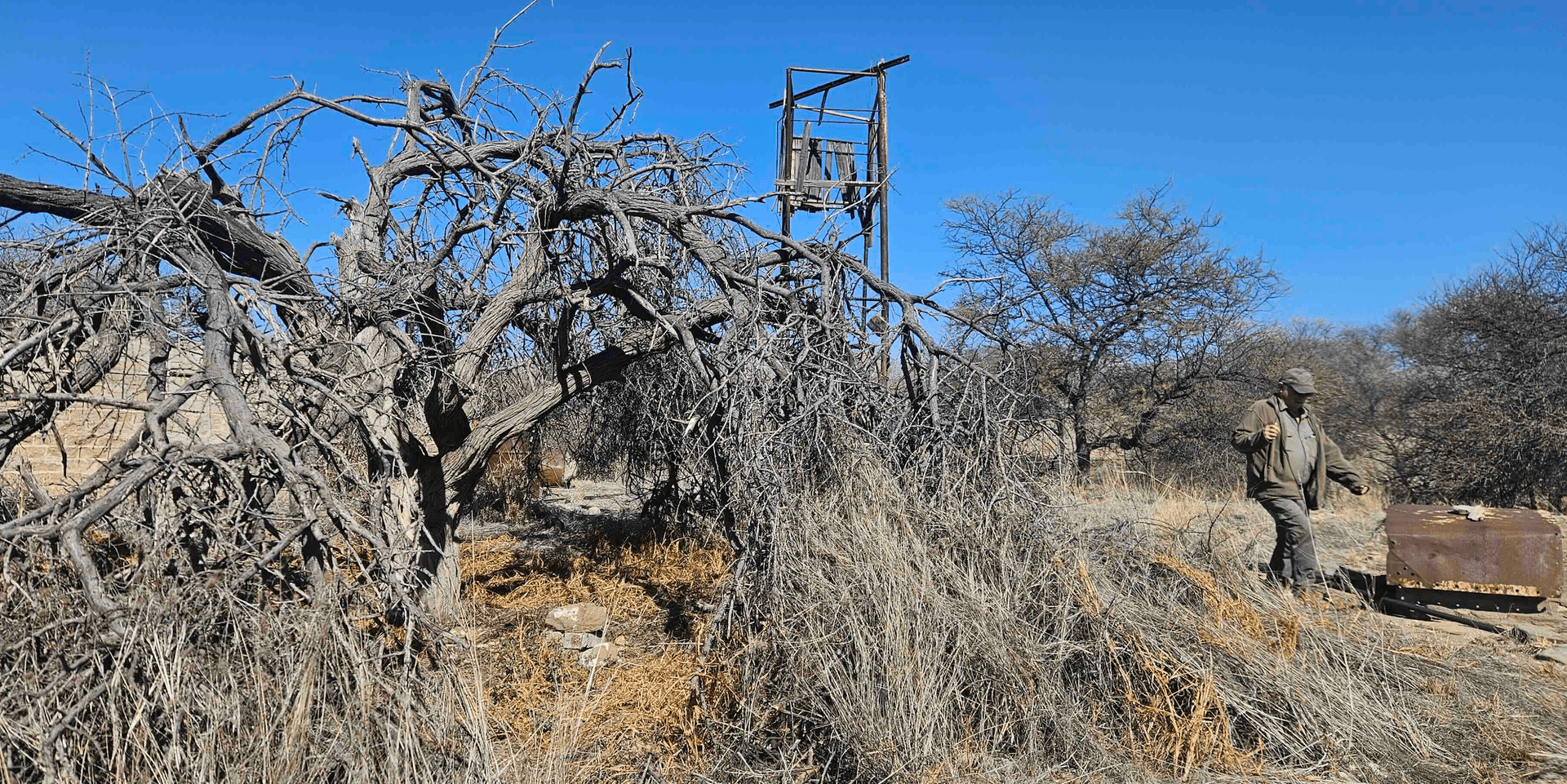
We marked the spot for the owner.
Site 3: An abandoned borehole by the dry riverbed
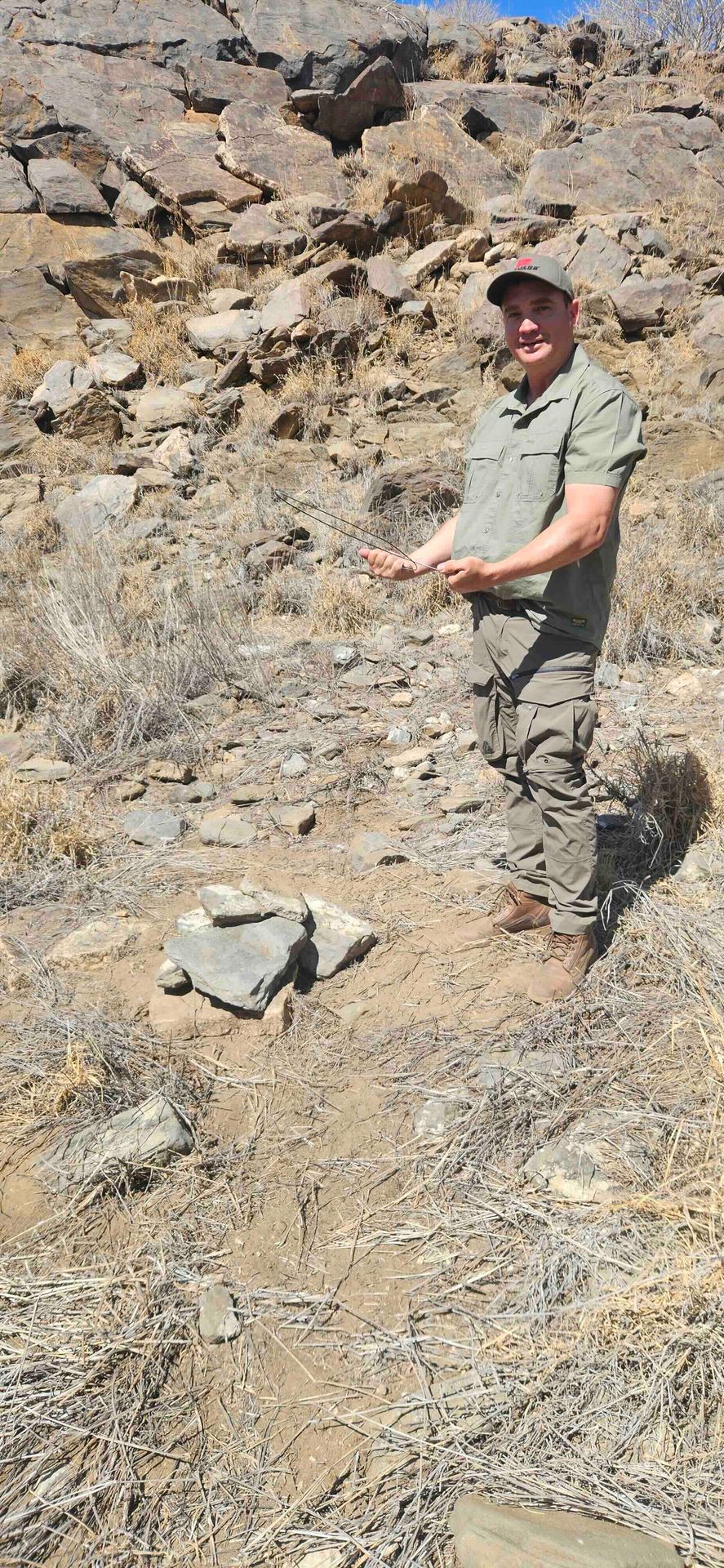
But about 20 metres away the picture changed. In line with an evergreen bush and a couple of big trees, we picked up a clear signal again. This is one of the things I always tell farm owners: look at what is still green in the dry season. In a landscape where everything else has gone grey and brown, a bush that stays evergreen and a cluster of large trees are usually drinking from something. The rods agreed.
Site 4: Nothing to find
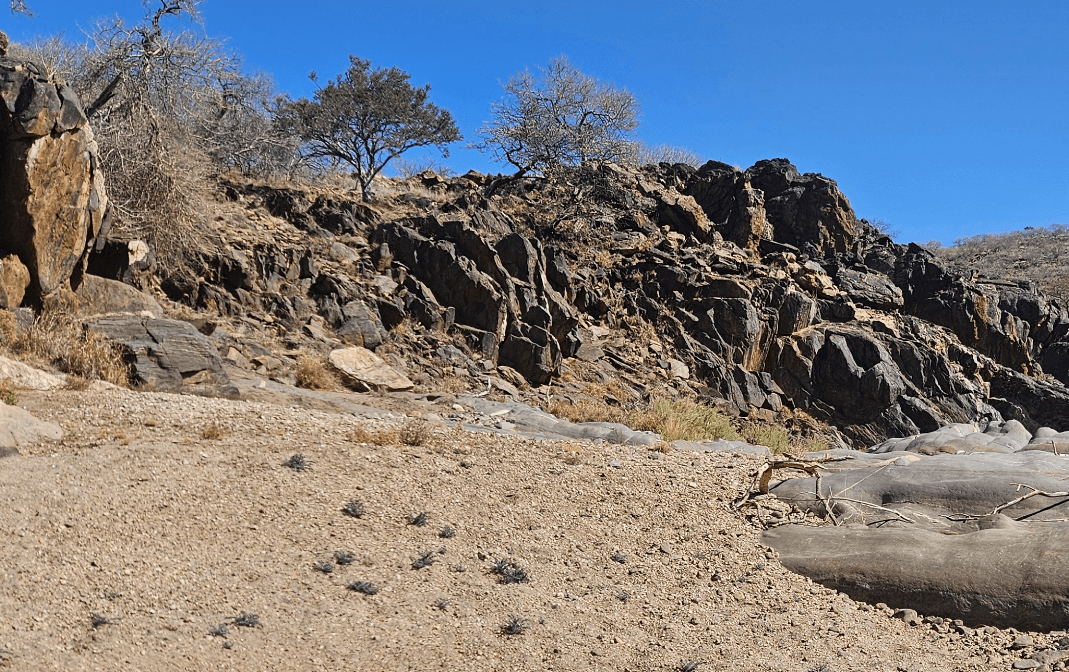
The fourth abandoned borehole showed no sign that there was still any water-bearing crack or vein underneath it. To be thorough, my dad and I walked a circumference of roughly 500 metres around the site. Nothing. Not a single reaction.
That is also a result. Part of the job is being honest when there is no water to find. Drilling is expensive, and telling an owner "don't drill here" can save more money than a good site sometimes makes.
A water sample from the farmhouse borehole
Before we left, we collected a water sample from the working borehole near the house. The farm workers mentioned that drinking the water straight from the borehole gave them stomach problems, and that they had started boiling it first. That is worth taking seriously. Borehole water in Namibia can be perfectly good or it can carry high mineral loads or bacteria, and the only way to know is to test it. We have sent the sample for analysis and will share what comes back in a follow-up post.
The day in short
Four old boreholes. One still producing, three dry. Two new sites that both my dad and I are confident about – one with three veins under the kameeldoring, one in line with the evergreen bush near the riverbed. One area where we recommend not drilling at all. And one water sample on its way to the lab.
Wildlife count for the day: one wild cat, and that was it. The Hochland was quiet, cool and beautiful, and I got to spend it outdoors with my dad doing something we both love. Not a bad Saturday.
Do you have old, dry boreholes on your farm and aren't sure where to drill next? Get in touch – we travel across Namibia and are happy to have a look.